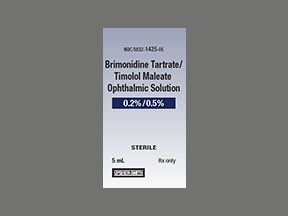
Brimonidine Tartrate-Timolol
Brimonidine Tartrate-Timolol 5ML of 0.2-0.5%
¿Qué es Brimonidine Tartrate-Timolol?
El Tartrato de Brimonidina-Timolol es un medicamento utilizado para reducir la presión ocular en personas con glaucoma o hipertensión ocular. Ayuda a prevenir la pérdida de visión al reducir el fluido en los ojos.Side Effects
- Chest pain or discomfort
- Slow, fast, or uneven heartbeat
- Allergic reaction: Itching or hives, swelling in your face or hands, swelling or tingling in your mouth or throat, chest tightness, trouble breathing
Warnings
- Tell your doctor if you are pregnant or breastfeeding, or if you have a blood vessel disorder, depression, diabetes, heart disease, low blood pressure, lung disease, myasthenia gravis, overactive thyroid, or a history of stroke or allergies. Tell your doctor if you have had eye surgery.
- Ophthalmic routeIf you hurt your eye, develop an eye infection, or need to have eye surgery, talk with your doctor right away. You may need to change your medicine or stop using it.
- Tell any doctor or dentist who treats you that you are using this medicine. You may need to stop using this medicine several days before you have surgery or medical tests.
- This medicine may raise or lower your blood sugar level.
- This medicine may make you drowsy. Do not drive or do anything that could be dangerous until you know how this medicine affects you.
Prescription savings · ·
¿Qué es Brimonidine Tartrate-Timolol ?
El Tartrato de Brimonidina-Timolol es un medicamento utilizado para reducir la presión ocular en personas con glaucoma o hipertensión ocular. Ayuda a prevenir la pérdida de visión al reducir el fluido en los ojos.Source: MedlinePlus, Biblioteca Nacional de Medicina de EE. UU.
Brimonidine Tartrate-Timolol Cupones y Precios - Rx.com
Brimonidine Tartrate-Timolol 5ML of 0.2-0.5%
4 ED medications in one dose
Apomorphine, sildenafil, tadalafil & vardenafil · One sublingual dose · Free express shipping
Brimonidine Tartrate-Timolol prices by dosage
Lowest cash price with a free Rx.com coupon vs. the average retail price.
| Dosis | Cantidad | Retail price | Rx.com price |
|---|---|---|---|
| 5ml of 0.2-0.5% · Bottle | 5 | $48.98 | $27.34 |
| 10ml of 0.2-0.5% · Bottle | 5 | $58.74 | $24.06 |
| 15ml of 0.2-0.5% · Bottle | 15 | $668.99 | $43.26 |
Cash prices near ZIP 77433; updated regularly. Actual pharmacy price may vary.
¿Buscas un cupón para brimonidine-tartrate-timolol? La solución oftálmica de tartrato de brimonidina / maleato de timolol es la forma genérica de Combigan, unas gotas para los ojos que se aplican dos veces al día y reducen la presión ocular elevada en el glaucoma de ángulo abierto o la hipertensión ocular. Por ser un genérico, ya es una de las formas más económicas de tratar la presión ocular alta, pero el precio en efectivo aún varía mucho de una farmacia a otra. Ingresa tu código postal arriba para ver el precio de hoy y comparar un descuento gratuito de Rx.com en más de 60,000 farmacias cerca de ti.
¿Qué es brimonidina-timolol y cómo funciona?
El tartrato de brimonidina / maleato de timolol es una gota combinada para los ojos que reúne dos medicamentos reductores de presión en un solo frasco. La brimonidina es un agonista adrenérgico alfa-2 y el timolol es un bloqueador beta-adrenérgico no selectivo. Juntos reducen la cantidad de líquido que produce el ojo y ayudan a que el líquido drene, lo que disminuye la presión intraocular (PIO). Es el equivalente genérico de la marca Combigan.
Se receta para personas con glaucoma de ángulo abierto o hipertensión ocular cuya presión ocular no se controla lo suficiente con un solo medicamento, ya sea como terapia complementaria (adyuvante) o como reemplazo. La dosis habitual es una gota en el ojo u ojos afectados dos veces al día, aproximadamente cada 12 horas. Sigue siempre las indicaciones exactas de tu oftalmólogo.
Costo del brimonidina-timolol genérico sin seguro
El brimonidina-timolol genérico está ampliamente disponible y es sustituible por Combigan, por lo que en general es mucho menos costoso que la marca. Aun así, el precio en efectivo sin seguro puede variar bastante según la farmacia que uses, por lo que conviene comparar antes de surtir. Rx.com verifica precios con descuento en más de 60,000 farmacias para que puedas encontrar un precio más bajo cerca de ti. Ingresa tu código postal arriba para ver el precio de hoy e imprimir o enviarte por mensaje de texto un cupón gratuito.
Si tu profesional de salud quiere que uses la marca, el fabricante de Combigan (AbbVie) ofrece un programa oficial de ahorro del fabricante en el sitio web de Combigan; la elegibilidad y los términos varían y por lo general no se puede combinar con un cupón de descuento. Para la mayoría de las personas, comparar los precios en efectivo del genérico con un cupón gratuito de Rx.com es la forma más sencilla de mantener bajos los costos.
Alternativas y gotas relacionadas para la presión ocular
El brimonidina-timolol es una de varias opciones para reducir la presión ocular, y tu médico elige según qué tan bien se controle tu presión y cómo toleras cada gota. Entre los medicamentos relacionados que quizás quieras comparar se incluyen:
- Combigan - la versión de marca de esta misma combinación de brimonidina-timolol.
- Brimonidina - el componente agonista alfa-2 usado por sí solo.
- Timolol - el componente bloqueador beta usado por sí solo.
- Dorzolamida-timolol - otra gota combinada para los ojos de dos veces al día que reúne un bloqueador beta con un inhibidor de la anhidrasa carbónica.
- Latanoprost - una gota de prostaglandina de una vez al día que se usa a menudo como opción de primera línea.
No cambies ni suspendas las gotas por tu cuenta. Pregúntale a tu oftalmólogo qué opción se ajusta a tus metas de presión y a tu historial de salud, y luego compara los precios aquí.
Seguridad, contraindicaciones y quién no debe usarlo
El brimonidina-timolol no tiene una advertencia en recuadro de la FDA, pero la parte de timolol (bloqueador beta) se absorbe en el torrente sanguíneo y conlleva precauciones reales. Está contraindicado en personas con enfermedad reactiva de las vías respiratorias, como asma bronquial o antecedentes de asma, EPOC grave, bradicardia sinusal, bloqueo AV de segundo o tercer grado, insuficiencia cardíaca manifiesta o shock cardiogénico. Debido a que el bloqueador beta puede llegar al resto del cuerpo, puede causar reacciones respiratorias graves (broncoespasmo) y reacciones cardíacas graves, y puede enmascarar las señales de advertencia de una baja de azúcar en la sangre y de una tiroides hiperactiva.
La parte de brimonidina puede causar somnolencia, fatiga y bajar la presión arterial. Este medicamento no es para recién nacidos ni bebés menores de 2 años por el riesgo de apnea y depresión del sistema nervioso central, y debe usarse con precaución en niños mayores. Informa a tu médico sobre todas tus condiciones de salud y medicamentos. Esta es información general, no consejo médico, así que habla con tu profesional de salud o farmacéutico sobre lo que es adecuado para ti.
La información sobre Brimonidine Tartrate-Timolol fue redactada y revisada con base en fuentes médicas autorizadas de EE. UU. (MedlinePlus, de la Biblioteca Nacional de Medicina de EE. UU.; DailyMed; y la información de prescripción de la FDA) y verificada para asegurar su precisión. Se ofrece con fines educativos y no sustituye el consejo médico profesional.
Consulte la etiqueta oficial: Brimonidine Tartrate-Timolol en DailyMed (FDA)
Revisado con base en el etiquetado de la FDA · Última revisión: julio de 2026
Medicamentos Relacionados
Browse more medications: starting with B · full A-Z directory · by condition · common drugs
Medical disclaimer: This information is provided for general educational purposes only and is not medical advice. It is not a substitute for professional diagnosis or treatment. Always consult a licensed physician, pharmacist, or other qualified healthcare provider before starting, stopping, or changing any medication or treatment. Never disregard professional medical advice or delay seeking it because of something you read here. If you think you may have a medical emergency, call your doctor or 911 immediately.


