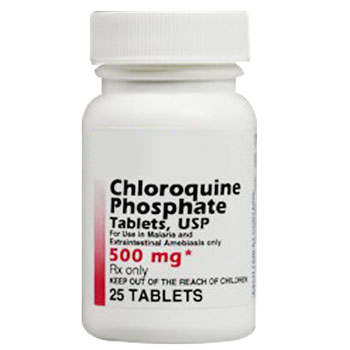
Chloroquine Phosphate
Chloroquine Phosphate
¿Qué es Chloroquine Phosphate?
El fosfato de cloroquina es un medicamento genérico utilizado para tratar y prevenir la malaria. El precio promedio del fosfato de cloroquina es de aproximadamente $95 por un suministro de 7 tabletas orales de 500 mg. Puedes usar nuestra oferta de ahorro de Rx.com para obtener un descuento de hasta el 80% sobre el precio de venta al público en farmacias participantes cerca de ti.Side Effects
- Changes in vision, trouble seeing, light flashes
- Lightheadedness, dizziness, fainting
- Swelling in your hands, ankles, or feet
Warnings
- Tell your doctor if you are pregnant or breastfeeding, or if you have kidney disease, liver disease, heart disease, blood disorders (including porphyria, G6PD deficiency), psoriasis, hearing problems, or a history of epilepsy or heart rhythm problems. Tell your doctor if you drink alcohol.
- Tell your doctor if you have had eye or vision problems caused by chloroquine or similar drugs.
- This medicine may cause the following problems:Heart problemsLow blood sugar, which could be life-threateningChanges in heart rhythm, including QT prolongationChanges in vision, eye damageMuscle and nerve problemIncreased risk of seizures
- Call your doctor if your symptoms do not improve or if they get worse.
- Your doctor will do lab tests at regular visits to check on the effects of this medicine. Keep all appointments.
Prescription savings · ·
¿Qué es Chloroquine Phosphate ?
El fosfato de cloroquina es un medicamento genérico utilizado para tratar y prevenir la malaria. El precio promedio del fosfato de cloroquina es de aproximadamente $95 por un suministro de 7 tabletas orales de 500 mg. Puedes usar nuestra oferta de ahorro de Rx.com para obtener un descuento de hasta el 80% sobre el precio de venta al público en farmacias participantes cerca de ti.Chloroquine Phosphate Cupones y Precios - Rx.com
Chloroquine Phosphate

4 ED medications in one dose
Apomorphine, sildenafil, tadalafil & vardenafil · One sublingual dose · Free express shipping
Chloroquine Phosphate (Aralen) is a prescription medication used to prevent and treat malaria caused by chloroquine-sensitive strains of the Plasmodium parasite. It has also been prescribed to treat certain autoimmune diseases, including rheumatoid arthritis and systemic lupus erythematosus (SLE), due to its ability to reduce inflammation and regulate immune system activity. Although chloroquine was once widely used around the world, many malaria parasites have developed resistance, so its use now depends on the region where malaria was acquired or where travel is planned.
For malaria, chloroquine works by interfering with the parasite's ability to grow and reproduce inside red blood cells, ultimately killing the parasite. In autoimmune conditions, it helps reduce immune system activity and inflammation, which can decrease joint pain, swelling, skin symptoms, and disease flare-ups. The medication has been used safely for decades when taken under appropriate medical supervision.
Chloroquine Phosphate is typically taken once weekly for malaria prevention, beginning before travel and continuing for several weeks after leaving a malaria-endemic area. For the treatment of malaria or autoimmune diseases, dosing schedules vary depending on the condition being treated. Patients should take the medication exactly as prescribed and attend regular follow-up appointments, particularly during long-term therapy.
Common side effects include nausea, vomiting, diarrhea, stomach pain, headache, dizziness, and itching. Long-term use or high doses may increase the risk of retinal damage, which can affect vision, so patients receiving prolonged treatment may require regular eye examinations. Other rare but serious side effects include heart rhythm problems, muscle weakness, low blood sugar, and severe allergic reactions. Patients should notify their healthcare provider if they experience vision changes, irregular heartbeat, or significant muscle weakness while taking chloroquine.
Whether you're preparing for international travel or managing an autoimmune condition, Rx.com makes it easy to compare Chloroquine Phosphate pharmacy prices, find prescription savings, and use the free Rx.com Prescription Discount Card to help lower your medication costs. If you need a new prescription, medication refill, or travel medicine consultation, you can also connect with a licensed healthcare provider online to determine whether chloroquine phosphate is the right treatment for your needs.
Medicamentos Relacionados
Browse more medications: starting with C · full A-Z directory · by condition · common drugs
Medical disclaimer: This information is provided for general educational purposes only and is not medical advice. It is not a substitute for professional diagnosis or treatment. Always consult a licensed physician, pharmacist, or other qualified healthcare provider before starting, stopping, or changing any medication or treatment. Never disregard professional medical advice or delay seeking it because of something you read here. If you think you may have a medical emergency, call your doctor or 911 immediately.


