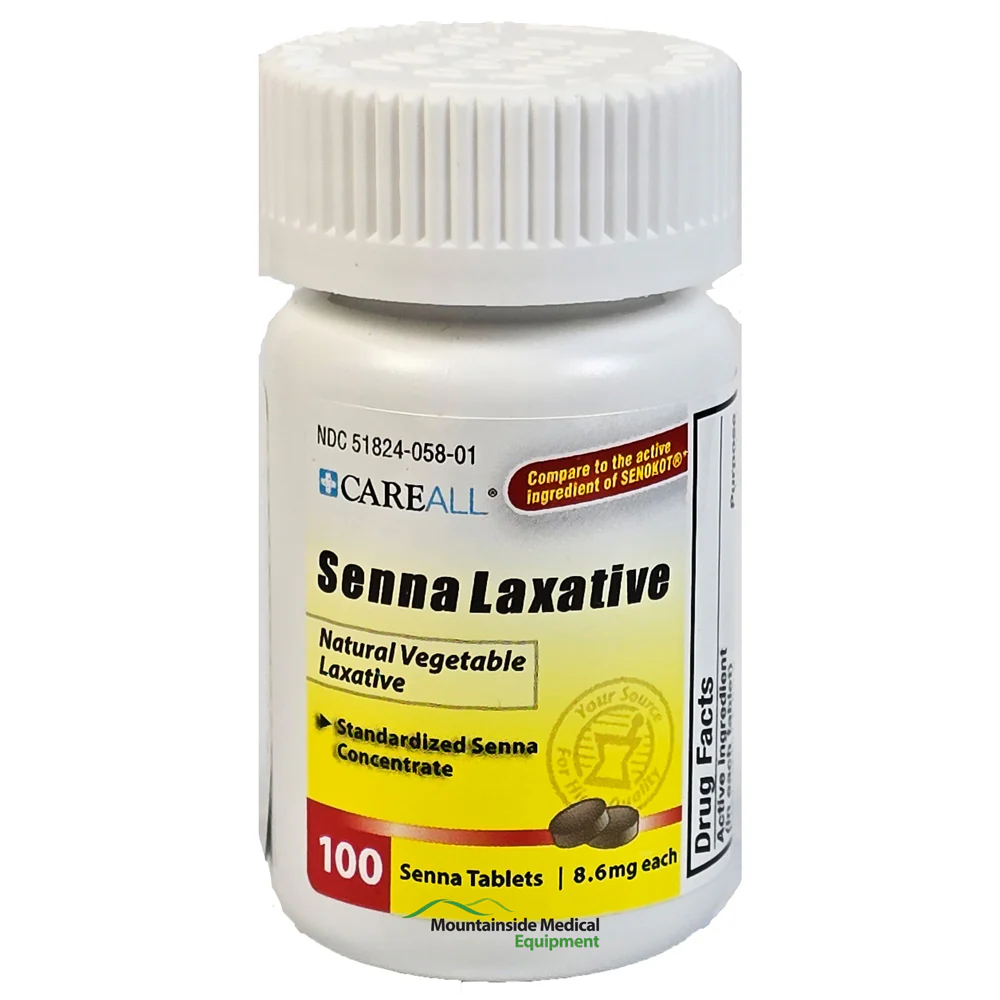
Senna
Senna
What is Senna?
Senna is a medication used to treat constipation and to help empty the bowels before surgery or medical procedures. It works by stimulating the intestines to promote bowel movements.
Side Effects
- abdominal pain
- diarrhea
Warnings
- Do not use senna for more than two weeks as prolonged use could lead to dependency.
- Avoid using if you have intestinal blockage, acute intestinal inflammation (e.g., Crohn's disease, ulcerative colitis), appendicitis, or severe dehydration.
Prescription savings · · · ·
What is Senna ?
Senna is a medication used to treat constipation and to help empty the bowels before surgery or medical procedures. It works by stimulating the intestines to promote bowel movements.
- abdominal pain
- diarrhea
- Do not use senna for more than two weeks as prolonged use could lead to dependency.
- Avoid using if you have intestinal blockage, acute intestinal inflammation (e.g., Crohn's disease, ulcerative colitis), appendicitis, or severe dehydration.
Senna Coupons & Prices
Senna
No Prescription Needed
Senna is available over the counter — order online or pick up at a pharmacy near you.
Where to Buy Senna
No prescription needed. Purchase online or in-store.
Weight-loss medication, prescribed online
Licensed U.S. providers · No insurance needed · Shipped to your door
Senna prices by dosage
Lowest cash price with a free Rx.com coupon vs. the average retail price.
| Dosage | Quantity | Retail price | Rx.com price |
|---|---|---|---|
| 1ml of · Bottle | 150 | — | $137.03 |
| 4 tablets · Bottle | 60 | — | $6.70 |
| 100 tablets · Bottle | 60 | $14.95 | $5.06 |
| 237ml of 8.8mg/5ml · Bottle | 237 | $15.49 | $13.40 |
| 237ml of 176mg/5ml · Bottle | 237 | $32.05 | $16.79 |
| 1000 tablets · Bottle | 100 | $20.00 | $5.22 |
Cash prices near ZIP 77433; updated regularly. Actual pharmacy price may vary.
Senna (sennosides) is an over-the-counter stimulant laxative used for the short-term relief of occasional constipation, sold under familiar brand names like Senokot and Ex-Lax. Because it is available without a prescription, you can buy it directly off the shelf, but a senna coupon from Rx.com may lower your cost at the pharmacy counter, and some shoppers pay less when a larger or store-brand size is run through a discount card. Enter your ZIP above to see today's price near you.
What is senna and how does it work?
Senna is a stimulant laxative made from the senna plant. Its active ingredients, sennosides A and B (also called senna glycosides), are anthraquinones. After you swallow a dose, bacteria in your colon break the sennosides down into compounds that stimulate the muscles of the intestine to contract. This increased movement, along with more fluid drawn into the bowel, produces a bowel movement, usually within 6 to 12 hours.
It has FDA-approved OTC use for the short-term relief of occasional constipation. Senna is also commonly used to help empty the bowel before a colonoscopy, surgery, or other medical procedure, often alongside other agents. It is frequently paired with the stool softener docusate (as in Senokot-S) for constipation caused by opioid pain medicines.
How to save on senna with an Rx.com coupon
Senna is inexpensive and widely stocked, but prices still vary from store to store and between brand names like Senokot and Ex-Lax and their generic sennoside equivalents. Because senna is available both as an OTC product and, in some cases, as a pharmacy item, an Rx.com discount coupon can sometimes bring the register price below the sticker price, and larger bottles or store brands are often the better value per dose.
To check what you would pay, enter your ZIP code above to see today's price at pharmacies near you and print or show the free coupon. There is no membership or insurance required to use it.
Senna vs. other laxatives
Senna is a stimulant laxative, which is only one of several ways to treat constipation. The right choice depends on how quickly you need relief and how gentle you want the effect. Common alternatives include:
- Bisacodyl (Dulcolax) - another stimulant laxative that works in a similar way.
- Docusate - a stool softener that is gentler and often combined with senna for opioid-related constipation.
- Polyethylene glycol (MiraLAX) - an osmotic laxative that draws water into the stool.
- Lactulose - a prescription osmotic laxative.
- Magnesium citrate - a saline laxative often used for faster, stronger emptying before procedures.
Stimulant laxatives like senna are generally meant for short-term use, while some osmotic options may be used a bit longer under a doctor's guidance. Ask your pharmacist or provider which type fits your situation.
Safety, side effects, and who should be cautious
Senna has no boxed warning, but it is intended for short-term use only. Do not use it for more than 1 week without talking to a doctor, because prolonged or chronic use can lead to laxative dependence, loss of normal bowel function, and electrolyte disturbances. Do not use senna if you have abdominal pain, nausea, or vomiting, or if you have had a sudden change in bowel habits lasting more than 2 weeks. Stop and seek care if you notice rectal bleeding or you do not have a bowel movement after using it, since these can signal a more serious condition. Avoid taking senna together with mineral oil.
Common side effects include abdominal cramps, stomach discomfort, diarrhea, and a harmless discoloration of the urine. If you are pregnant or breastfeeding, talk to your doctor before using senna. Adults 65 and older should use it only short-term and with extra caution. This information is not medical advice; check with your pharmacist or provider if you have questions about your situation.
This Senna information was written and reviewed against authoritative U.S. medical sources — MedlinePlus (U.S. National Library of Medicine), DailyMed, and FDA prescribing information — and checked for accuracy. It is provided for education and is not a substitute for professional medical advice.
Verify the official label: Senna on DailyMed (FDA)
Reviewed against FDA labeling · Last reviewed July 2026
Related Drugs
Browse more medications: starting with S · full A-Z directory · by condition · common drugs
Medical disclaimer: This information is provided for general educational purposes only and is not medical advice. It is not a substitute for professional diagnosis or treatment. Always consult a licensed physician, pharmacist, or other qualified healthcare provider before starting, stopping, or changing any medication or treatment. Never disregard professional medical advice or delay seeking it because of something you read here. If you think you may have a medical emergency, call your doctor or 911 immediately.


