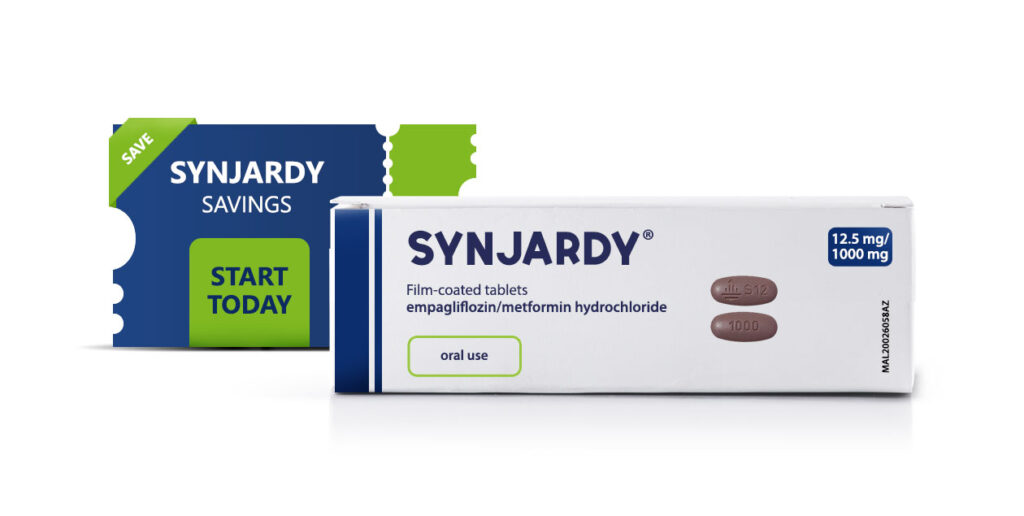
Synjardy
Synjardy
What is Synjardy?
Synjardy is a prescription medication that combines empagliflozin and metformin into a single tablet to help adults with type 2 diabetes improve blood sugar control. By targeting blood sugar through two complementary mechanisms, Synjardy can help lower A1C while also supporting heart and kidney health in appropriate patients.
Side Effects
- Fast or trouble breathing, nausea, vomiting, stomach pain, severe weakness, tiredness
- Change in how much or how often you urinate, bloody urine, difficult or painful urination, lower back or side pain, chills
- Allergic reaction: Itching or hives, swelling in your face or hands, swelling or tingling in your mouth or throat, chest tightness, trouble breathing
Warnings
- Tell any doctor or dentist who treats you that you are using this medicine. You may need to stop using this medicine several days before you have surgery or medical tests.
- This medicine may cause some patients to become dehydrated. Drink plenty of water every day, during exercise, or in hot weather.
- This medicine may cause the following problems:Lactic acidosis (too much acid in the blood)Low blood pressureKetoacidosis (high ketones and acid in the blood), which can be life-threateningKidney problemsLow blood sugar, when used with other diabetes medicineIncreased risk of genital yeast or urinary tract infections (including pyelonephritis, urosepsis)Increased risk for leg, foot, or toe amputationFournier's gangrene (skin or tissue damage of the area between the anus and genitals)
- Tell your doctor if have kidney disease, liver disease, heart failure, vitamin B12 deficiency, or a history of pancreas problems, urinary tract or genital yeast infections, leg problems (including amputation, blood vessel disease), or foot infection, sores, or ulcers. Tell your doctor if you are on a low-salt diet, if you drink alcohol, or if you are having surgery or other procedures that require fasting.
- Do not breastfeed during treatment with this medicine.
Prescription savings · · · ·
What is Synjardy ?
Synjardy is a prescription medication that combines empagliflozin and metformin into a single tablet to help adults with type 2 diabetes improve blood sugar control. By targeting blood sugar through two complementary mechanisms, Synjardy can help lower A1C while also supporting heart and kidney health in appropriate patients.
- Fast or trouble breathing, nausea, vomiting, stomach pain, severe weakness, tiredness
- Change in how much or how often you urinate, bloody urine, difficult or painful urination, lower back or side pain, chills
- Allergic reaction: Itching or hives, swelling in your face or hands, swelling or tingling in your mouth or throat, chest tightness, trouble breathing
- Lightheadedness, dizziness, fainting
- Pain, tenderness, redness, or swelling of the area between the anus and genitals, fever, unusual tiredness or weakness
- Increased hunger, confusion, shaking, trembling, sweating
- Pain, tenderness, sores or ulcers, or infections on the leg or foot
- Tell any doctor or dentist who treats you that you are using this medicine. You may need to stop using this medicine several days before you have surgery or medical tests.
- This medicine may cause some patients to become dehydrated. Drink plenty of water every day, during exercise, or in hot weather.
- This medicine may cause the following problems:Lactic acidosis (too much acid in the blood)Low blood pressureKetoacidosis (high ketones and acid in the blood), which can be life-threateningKidney problemsLow blood sugar, when used with other diabetes medicineIncreased risk of genital yeast or urinary tract infections (including pyelonephritis, urosepsis)Increased risk for leg, foot, or toe amputationFournier's gangrene (skin or tissue damage of the area between the anus and genitals)
- Tell your doctor if have kidney disease, liver disease, heart failure, vitamin B12 deficiency, or a history of pancreas problems, urinary tract or genital yeast infections, leg problems (including amputation, blood vessel disease), or foot infection, sores, or ulcers. Tell your doctor if you are on a low-salt diet, if you drink alcohol, or if you are having surgery or other procedures that require fasting.
- Do not breastfeed during treatment with this medicine.
- Tell your doctor if you are pregnant or planning to become pregnant. Do not use this medicine during the second and third part of your pregnancy, unless your doctor tells you to. It could harm an unborn baby. If you had problems ovulating or have irregular periods, this medicine may cause you to ovulate, which could lead to pregnancy if you are sexually active. Talk to your doctor about effective birth control while you are using this medicine.
- Keep all medicine out of the reach of children. Never share your medicine with anyone.
- Your doctor will do lab tests at regular visits to check on the effects of this medicine. Keep all appointments.
- Tell any doctor or dentist who treats you that you are using this medicine. This medicine may affect certain medical test results.
- Make sure any doctor or dentist who treats you knows that you are using this medicine. This medicine may interact with the dye used for an x-ray or a CT scan.
Synjardy Coupons & Prices
Synjardy

4 ED medications in one dose
Apomorphine, sildenafil, tadalafil & vardenafil · One sublingual dose · Free express shipping
Looking for a Synjardy coupon? Synjardy (empagliflozin/metformin hydrochloride) is a brand-name combination tablet for type 2 diabetes, and because there is no generic version yet, the cash price can be high. Enter your ZIP above to see today's Rx.com price at pharmacies near you, and compare it against the manufacturer's savings card so you can pick whichever lowers your out-of-pocket cost the most.
What is Synjardy and how does it work?
Synjardy is a fixed-dose combination tablet that puts two diabetes medicines in one pill: empagliflozin, an SGLT2 inhibitor that helps your kidneys remove extra sugar through the urine, and metformin hydrochloride, a biguanide that lowers the amount of sugar your liver makes and helps your body respond better to insulin. It is approved as an adjunct to diet and exercise to improve blood sugar control in adults with type 2 diabetes when treatment with both empagliflozin and metformin is appropriate.
Synjardy is not used for type 1 diabetes or for diabetic ketoacidosis. The empagliflozin ingredient on its own (sold as Jardiance) also carries heart and kidney benefit indications, such as reducing cardiovascular death in adults with type 2 diabetes and established cardiovascular disease; those cardiorenal benefits are established for the empagliflozin component rather than for the Synjardy combination product itself. Synjardy comes as an immediate-release tablet and as an extended-release version, Synjardy XR.
Synjardy cost: manufacturer savings card vs. Rx.com cash coupon
There is currently no generic version of Synjardy, so the main ways to lower your cost are the manufacturer's savings card and a cash discount coupon. Boehringer Ingelheim offers a Synjardy savings card, and you can review its terms on the official Synjardy savings and support page. Manufacturer copay cards like this are generally limited to people with commercial (private) insurance and typically exclude anyone with Medicare, Medicaid, or other government coverage; eligibility and terms vary, so check the official page before you count on it.
The Rx.com cash coupon works differently. It is a discount on the cash price, so it can help if you are uninsured, if you have Medicare or another government plan that makes you ineligible for the manufacturer card, or if the manufacturer card is declined at the pharmacy. You cannot combine a cash coupon with insurance on the same purchase, but you can compare both and use whichever is cheaper that day. Enter your ZIP above to see today's Synjardy price near you. Boehringer Ingelheim also runs patient assistance programs for people who qualify based on income and insurance status, which you can ask about through the same manufacturer support page.
Synjardy alternatives and related medications
If you and your provider are weighing options, several related medicines work in similar ways. The two ingredients in Synjardy are also available separately as empagliflozin (branded Jardiance) and metformin, and metformin has a low-cost generic that can be a major savings lever when taken as a standalone pill.
Other SGLT2-plus-metformin combination tablets include Xigduo XR (dapagliflozin/metformin) and Invokamet (canagliflozin/metformin). The standalone SGLT2 inhibitor Farxiga (dapagliflozin) is another commonly compared option. The extended-release form of this exact combination is Synjardy XR. Only your prescriber can decide which medication and formulation fit your situation, so use this list as a starting point for that conversation, not as medical advice.
Important safety information
Synjardy carries a boxed warning for lactic acidosis, a rare but serious and potentially fatal buildup of acid in the blood that comes from the metformin component. The risk goes up with kidney or liver impairment, dehydration, infection or sepsis, heavy alcohol use, and acute heart failure. Stop the medicine and seek medical care right away if you have symptoms such as unusual tiredness, muscle pain, trouble breathing, stomach pain, or feeling very cold or dizzy.
Other important risks include ketoacidosis (including euglycemic diabetic ketoacidosis, which can occur even when blood sugar is not very high), dehydration with low blood pressure and possible acute kidney injury, serious urinary tract infections such as pyelonephritis and urosepsis, genital yeast infections, a rare but serious infection of the tissue between the genitals and anus (Fournier's gangrene), low blood sugar when combined with insulin or sulfonylureas, and vitamin B12 deficiency from long-term metformin use. Your provider should check your kidney function before you start; Synjardy is not for people with significant kidney impairment or with metabolic acidosis. This is a general summary and not a substitute for your prescriber's or pharmacist's advice, so talk to them about your full medical history and any medicines you take.
This Synjardy information was written and reviewed against authoritative U.S. medical sources — MedlinePlus (U.S. National Library of Medicine), DailyMed, and FDA prescribing information — and checked for accuracy. It is provided for education and is not a substitute for professional medical advice.
Verify the official label: Synjardy on DailyMed (FDA)
Reviewed against FDA labeling · Last reviewed July 2026
Related Drugs
Browse more medications: starting with S · full A-Z directory · by condition · common drugs
Medical disclaimer: This information is provided for general educational purposes only and is not medical advice. It is not a substitute for professional diagnosis or treatment. Always consult a licensed physician, pharmacist, or other qualified healthcare provider before starting, stopping, or changing any medication or treatment. Never disregard professional medical advice or delay seeking it because of something you read here. If you think you may have a medical emergency, call your doctor or 911 immediately.


