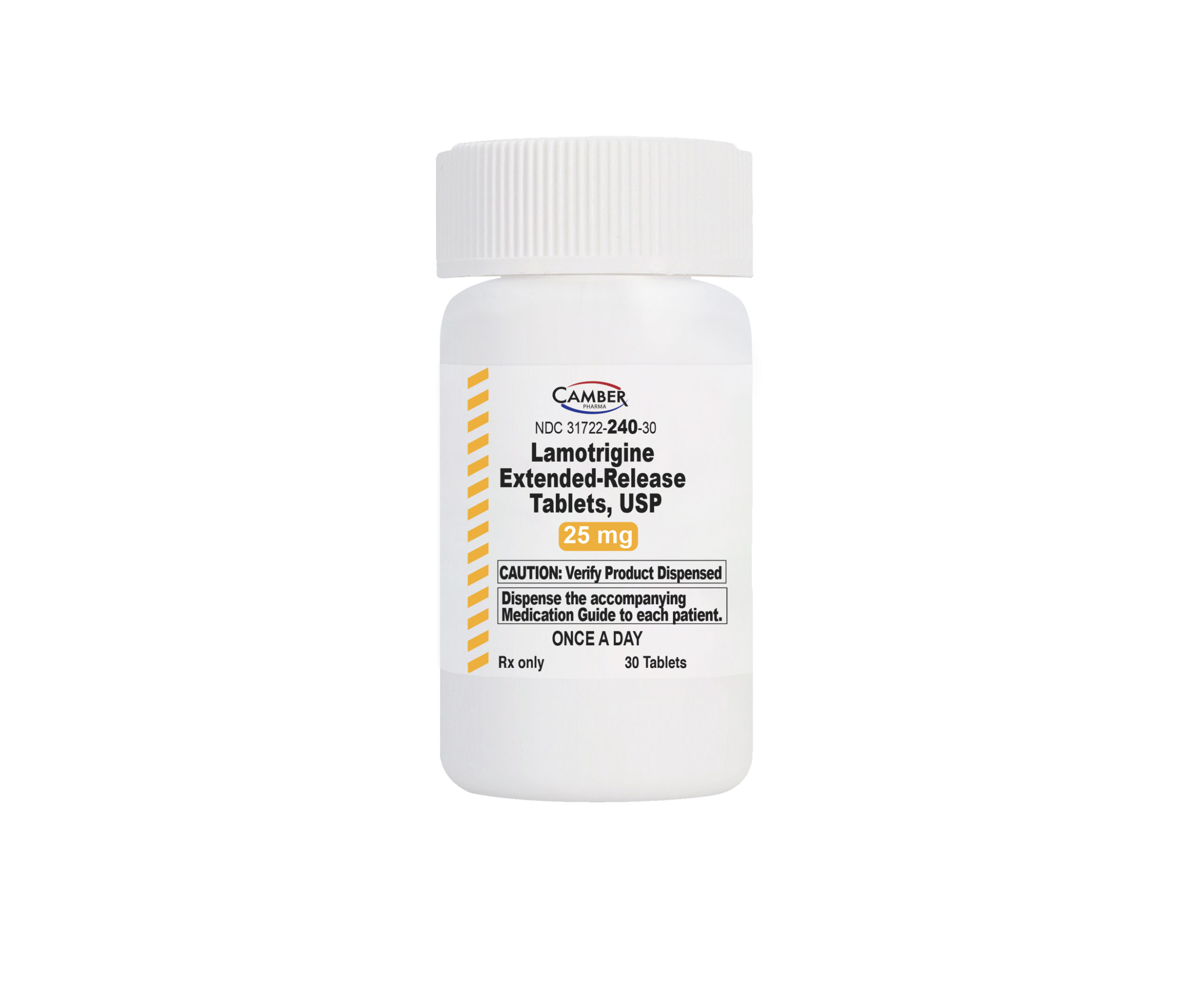
Lamotrigine
lamoTRIgine 100MG
What is Lamotrigine?
Lamotrigine is a prescription anticonvulsant medication used to treat epilepsy and bipolar disorder. For epilepsy, it is used as monotherapy or adjunctive therapy for partial seizures, primary generalized tonic-clonic seizures, and the generalized seizures of Lennox-Gastaut syndrome. For bipolar disorder, it is one of the most widely used medications for the maintenance phase — helping to delay the recurrence of mood episodes, particularly depression. Lamotrigine works by stabilizing electrical activity in the brain, primarily by blocking voltage-gated sodium channels and inhibiting the release of glutamate — an excitatory neurotransmitter. Dosing requires a slow titration schedule to minimize the risk of serious skin reactions. A licensed provider can prescribe lamotrigine online through Rx.com for epilepsy or bipolar disorder management.
Side Effects
- Painful sores in your mouth or around your eyes
- Unusual bleeding, bruising, or weakness
- Thoughts of hurting yourself, other unusual thoughts or behaviors
Warnings
- Tell your doctor if you are pregnant or breastfeeding, or if you have kidney disease, liver disease, heart disease (including heart attack, heart failure), heart rhythm problems, or a history of depression. Tell your doctor if you have had a rash or an allergic reaction to other seizure medicines.
- This medicine may cause the following problems:Serious skin reactionHemophagocytic lymphohistiocytosis, a rare disorder which may be life-threateningDrug reaction with eosinophilia and systemic symptoms (DRESS), which may damage organs, including the liver, kidney, or heartIncreased risk of thoughts of suicide or other serious mood changesMeningitis (swelling of the membrane covering the brain and spinal cord)Eye or vision problems
- This medicine may make you dizzy or drowsy. Do not drive or do anything else that could be dangerous until you know how this medicine affects you.
- This medicine may make you bleed, bruise, or get infections more easily. Take precautions to prevent illness and injury. Wash your hands often.
- Do not stop using this medicine suddenly. Your doctor will need to slowly decrease your dose before you stop it completely.
Prescription savings · · · ·
What is Lamotrigine ?
Lamotrigine is a prescription anticonvulsant medication used to treat epilepsy and bipolar disorder. For epilepsy, it is used as monotherapy or adjunctive therapy for partial seizures, primary generalized tonic-clonic seizures, and the generalized seizures of Lennox-Gastaut syndrome. For bipolar disorder, it is one of the most widely used medications for the maintenance phase — helping to delay the recurrence of mood episodes, particularly depression. Lamotrigine works by stabilizing electrical activity in the brain, primarily by blocking voltage-gated sodium channels and inhibiting the release of glutamate — an excitatory neurotransmitter. Dosing requires a slow titration schedule to minimize the risk of serious skin reactions. A licensed provider can prescribe lamotrigine online through Rx.com for epilepsy or bipolar disorder management.
- Painful sores in your mouth or around your eyes
- Unusual bleeding, bruising, or weakness
- Thoughts of hurting yourself, other unusual thoughts or behaviors
- Fever, chills, cough, sore throat, body aches, swollen glands in your armpits, neck, or groin
- Allergic reaction: Itching or hives, swelling in your face or hands, swelling or tingling in your mouth or throat, chest tightness, trouble breathing
- Blistering, peeling, or red skin rash
- Blurred vision, double vision, or other vision problems
- Feeling depressed, irritable, or restless
- Stiff neck or back, headache, fever, nausea, vomiting
- Yellow skin or eyes
- Tell your doctor if you are pregnant or breastfeeding, or if you have kidney disease, liver disease, heart disease (including heart attack, heart failure), heart rhythm problems, or a history of depression. Tell your doctor if you have had a rash or an allergic reaction to other seizure medicines.
- This medicine may cause the following problems:Serious skin reactionHemophagocytic lymphohistiocytosis, a rare disorder which may be life-threateningDrug reaction with eosinophilia and systemic symptoms (DRESS), which may damage organs, including the liver, kidney, or heartIncreased risk of thoughts of suicide or other serious mood changesMeningitis (swelling of the membrane covering the brain and spinal cord)Eye or vision problems
- This medicine may make you dizzy or drowsy. Do not drive or do anything else that could be dangerous until you know how this medicine affects you.
- This medicine may make you bleed, bruise, or get infections more easily. Take precautions to prevent illness and injury. Wash your hands often.
- Do not stop using this medicine suddenly. Your doctor will need to slowly decrease your dose before you stop it completely.
- Your doctor will do lab tests at regular visits to check on the effects of this medicine. Keep all appointments.
- Tell any doctor or dentist who treats you that you are using this medicine. This medicine may affect certain medical test results.
- Keep all medicine out of the reach of children. Never share your medicine with anyone.
- Unusual bleeding, bruising, or weakness
- Yellow skin or eyes
Lamotrigine Coupons & Prices
lamoTRIgine 100MG

Weight-loss medication, prescribed online
Licensed U.S. providers · No insurance needed · Shipped to your door
Looking for a lamotrigine coupon? Lamotrigine is the widely used generic version of Lamictal, an anticonvulsant and mood stabilizer prescribed for certain seizure disorders and for the maintenance treatment of bipolar I disorder. Because it is available as a generic, lamotrigine is already one of the lower-cost options in its class, but the cash price can still vary widely from one pharmacy to the next. Enter your ZIP code above to see today's lamotrigine price at pharmacies near you, and use the free Rx.com discount to compare across more than 60,000 pharmacies in one place.
What is lamotrigine and how does it work?
Lamotrigine is an antiepileptic medication in the phenyltriazine class that is also used as a mood stabilizer. It is FDA-approved for the adjunctive (add-on) treatment of partial-onset seizures, primary generalized tonic-clonic seizures, and the generalized seizures of Lennox-Gastaut syndrome in patients 2 years and older, and it may be used to convert to monotherapy for partial seizures in patients 16 and older. It is also approved for the maintenance treatment of bipolar I disorder in adults, where it helps delay the time to new mood episodes such as depression, mania, hypomania, and mixed episodes.
Lamotrigine is sold under brand names including Lamictal, Lamictal XR (extended-release), Lamictal ODT (orally disintegrating), Lamictal CD (chewable/dispersible), and Subvenite. Your prescriber decides which form and dose is right for you. This page is general information, not medical advice.
Lamotrigine cost and coupon: comparing pharmacies pays off
Lamotrigine is a generic medication, so it is generally far less expensive than the brand-name versions. Even so, the cash price without insurance is not the same everywhere. Pharmacies set their own prices, and the difference between two stores in the same town can be significant, which is exactly why comparing before you fill matters. A discount coupon can also help whether or not you have insurance, since the discounted cash price is sometimes lower than a copay.
Rx.com pulls live prices from more than 60,000 pharmacies so you can see the real cost today rather than guessing. Enter your ZIP code above to see today's lamotrigine price near you, then bring the free coupon to the pharmacy counter. Prices change, so we show them live on the page rather than quoting a fixed figure.
Lamotrigine vs. brand and other alternatives
Lamotrigine is the generic equivalent of brand-name Lamictal, so most people can use the generic and pay much less for the same active ingredient. Do not switch between the brand and generic, or between different lamotrigine formulations, without talking to your prescriber, because the dosing needs to stay consistent.
Depending on your diagnosis, your prescriber may consider other antiepileptic or mood-stabilizing medications. Related options include levetiracetam, topiramate, valproic acid, carbamazepine, oxcarbazepine, and gabapentin. Each works differently and has its own benefits and risks, so the right choice depends on your condition and history. Only your prescriber can decide which medication fits you.
Important safety information
Lamotrigine carries a boxed warning for serious, potentially life-threatening skin rashes, including Stevens-Johnson syndrome and toxic epidermal necrolysis. The risk is higher in children, when the starting dose is higher than recommended, when the dose is increased too quickly, or when lamotrigine is combined with valproate. Most serious rashes appear within the first 2 to 8 weeks of treatment. This is why lamotrigine is always started at a low dose and increased slowly, and why it should be tapered gradually rather than stopped suddenly.
Other serious risks include multiorgan hypersensitivity reactions (DRESS), a blood disorder called hemophagocytic lymphohistiocytosis (HLH), aseptic meningitis, blood cell abnormalities, suicidal thoughts or behavior (a class warning for antiepileptic drugs), and possible heart rhythm or conduction problems, so it is generally avoided in people with certain heart conditions. Call your prescriber right away if you develop a rash, fever, swollen glands, or other unusual symptoms. This is general information and not a substitute for the advice of your doctor or pharmacist, who can review your full history.
This Lamotrigine information was written and reviewed against authoritative U.S. medical sources — MedlinePlus (U.S. National Library of Medicine), DailyMed, and FDA prescribing information — and checked for accuracy. It is provided for education and is not a substitute for professional medical advice.
Verify the official label: Lamotrigine on DailyMed (FDA)
Reviewed against FDA labeling · Last reviewed July 2026
Lamotrigine — Articles & Guides

Related Drugs
Browse more medications: starting with L · full A-Z directory · by condition · common drugs
Medical disclaimer: This information is provided for general educational purposes only and is not medical advice. It is not a substitute for professional diagnosis or treatment. Always consult a licensed physician, pharmacist, or other qualified healthcare provider before starting, stopping, or changing any medication or treatment. Never disregard professional medical advice or delay seeking it because of something you read here. If you think you may have a medical emergency, call your doctor or 911 immediately.


