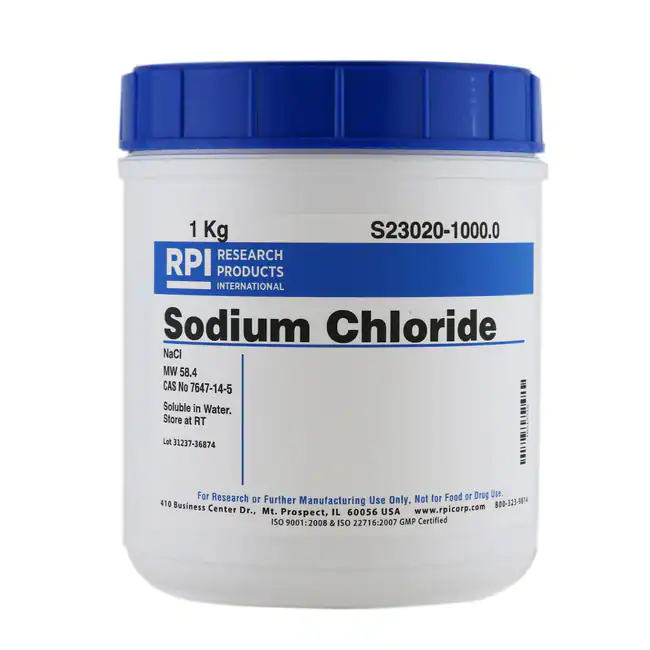
Sodium Chloride
Sodium Chloride
What is Sodium Chloride?
Sodium Chloride is used to treat sodium loss due to dehydration and excessive sweating. Sodium Chloride is a generic drug. On average Sodium Chloride is priced at about $12 for 100, 3 mL of bacteriostatic 0.9% injectable solution. Luckily, you can use our Rx.com savings offer to receive a Sodium Chloride discount of up to 80% off the retail price at participating pharmacies near you.
Side Effects
- Allergic reaction: Itching or hives, swelling in your face or hands, swelling or tingling in your mouth or throat, chest tightness, trouble breathing
Warnings
- Make sure your doctor knows if you have diabetes.
- If this medicine was used in your eye, call your doctor if you start to have eye pain or vision changes after using this medicine.
- Make sure your doctor knows if you are pregnant or breast feeding.
Prescription savings · · · ·
What is Sodium Chloride ?
Sodium Chloride is used to treat sodium loss due to dehydration and excessive sweating. Sodium Chloride is a generic drug. On average Sodium Chloride is priced at about $12 for 100, 3 mL of bacteriostatic 0.9% injectable solution. Luckily, you can use our Rx.com savings offer to receive a Sodium Chloride discount of up to 80% off the retail price at participating pharmacies near you.
- Allergic reaction: Itching or hives, swelling in your face or hands, swelling or tingling in your mouth or throat, chest tightness, trouble breathing
- Make sure your doctor knows if you have diabetes.
- If this medicine was used in your eye, call your doctor if you start to have eye pain or vision changes after using this medicine.
- Make sure your doctor knows if you are pregnant or breast feeding.
Sodium Chloride Coupons & Prices
Sodium Chloride

Weight-loss medication, prescribed online
Licensed U.S. providers · No insurance needed · Shipped to your door
Sodium Chloride prices by dosage
Lowest cash price with a free Rx.com coupon vs. the average retail price.
| Dosage | Quantity | Retail price | Rx.com price |
|---|---|---|---|
| 1gm of · Bottle | 20 | $11.99 | $7.45 |
| 5ml of 0.9% · Bottle | 500 | $41.95 | $39.77 |
| 15ml · Bottle | 750 | $61.99 | $41.53 |
| 44ml of 0.65% · Bottle | 44 | $9.99 | $4.84 |
| 100 tablets · Bottle | 90 | $14.95 | $12.76 |
| 100gm of · Bottle | 100 | $24.99 | $20.47 |
| 250ml of 0.9% · Bottle | 250 | $16.32 | $5.17 |
| 473ml of 4meq/ml · Bottle | 473 | $93.79 | $46.44 |
Cash prices near ZIP 77433; updated regularly. Actual pharmacy price may vary.
Looking for a sodium chloride coupon? Sodium chloride is the generic salt used in IV "normal saline," oral electrolyte tablets, saline nasal sprays and irrigation, nebulizer solutions, and 5% ophthalmic drops. Because it is a widely available generic, the cash cost is usually low, but the exact price still varies a lot from one pharmacy to the next depending on the form (tablet, solution, spray, or IV bag). Rx.com compares live prices at more than 60,000 U.S. pharmacies so you can see which one is cheapest near you. Enter your ZIP above to see today's price and print or text yourself a free coupon.
What is sodium chloride and how does it work?
Sodium chloride is a basic electrolyte, or mineral salt, that supplies your body with sodium and water. It is used to treat or prevent sodium loss and to correct fluid and electrolyte imbalances. Intravenous 0.9% sodium chloride, often called "normal saline," is given in hospitals and clinics for fluid replacement, as a vehicle or diluent to mix other medicines, and to help manage certain acid-base disturbances. Oral sodium chloride tablets (usually 1 gram) act as an electrolyte replenisher when sodium runs low from dehydration, heavy sweating, or heat cramps.
The same active ingredient appears in several other forms. Saline nasal sprays and irrigation rinses moisten and clear nasal passages, saline solutions for nebulizers and inhalation (including hypertonic 3% to 7% strengths) help loosen and clear mucus, and 5% ophthalmic sodium chloride drops or ointment are used to reduce corneal swelling (edema). A stronger 3% saline injection is reserved for severe, symptomatic low sodium and is given only under close medical supervision.
How much does sodium chloride cost without insurance?
Sodium chloride is available as a generic, so it is generally one of the lower-cost items at the pharmacy. Still, price is not the same everywhere. What you pay can swing widely depending on the form you need (oral tablets, saline nasal spray, nebulizer vials, or ophthalmic drops), the strength, the pack size, and the specific pharmacy's cash price. Some sodium chloride products are sold over the counter, while others (such as IV solutions and certain prescription strengths) go through a pharmacy, which also affects cost.
Because there is no single dominant branded prescription product for sodium chloride, comparing cash prices is the main way to save. A free Rx.com coupon can be used instead of insurance when the cash price beats your copay. Enter your ZIP above to see today's price at pharmacies near you, then bring the coupon to the counter. There is no manufacturer savings card for this generic, so pharmacy price comparison is the practical lever.
Related electrolyte and fluid medications
Sodium chloride is often used alongside, or compared with, other electrolyte and fluid products depending on what needs to be corrected. Your care team chooses among these based on your lab values and condition. Related options include:
- potassium chloride - replaces potassium, another key electrolyte
- sodium bicarbonate - used for certain acid-base (pH) problems
- lactated Ringer's - a balanced IV fluid used for hydration and volume replacement
- tolvaptan - a prescription option for certain types of low blood sodium
- furosemide - a diuretic used when the body is holding too much fluid
These are not interchangeable, and only a clinician can decide which is appropriate for you. If a product you need has both branded and generic versions, the generic is usually the lower-cost choice, and you can compare either on Rx.com.
Safety and things to watch for
Sodium chloride has no boxed warning, but it should be used carefully in any condition where extra sodium or fluid could be harmful, such as heart failure, cirrhosis, edema (swelling), high blood pressure, kidney impairment, and certain types of low sodium linked to fluid overload. In those settings, adding salt can worsen fluid retention. Too much sodium can also cause high blood sodium (hypernatremia), fluid overload, and swelling in the lungs or limbs.
When sodium chloride is used to treat low blood sodium (hyponatremia), the level must be raised slowly, generally no more than about 8 mmol/L over 24 hours, because correcting it too fast can cause a serious brain condition called osmotic demyelination syndrome. That is why blood sodium is monitored closely, and why concentrated (hypertonic) saline is given only in medical settings. This information is educational and not medical advice, so talk with your doctor or pharmacist about the right form, strength, and monitoring for your situation.
This Sodium Chloride information was written and reviewed against authoritative U.S. medical sources — MedlinePlus (U.S. National Library of Medicine), DailyMed, and FDA prescribing information — and checked for accuracy. It is provided for education and is not a substitute for professional medical advice.
Verify the official label: Sodium Chloride on DailyMed (FDA)
Reviewed against FDA labeling · Last reviewed July 2026
Related Drugs
Browse more medications: starting with S · full A-Z directory · by condition · common drugs
Medical disclaimer: This information is provided for general educational purposes only and is not medical advice. It is not a substitute for professional diagnosis or treatment. Always consult a licensed physician, pharmacist, or other qualified healthcare provider before starting, stopping, or changing any medication or treatment. Never disregard professional medical advice or delay seeking it because of something you read here. If you think you may have a medical emergency, call your doctor or 911 immediately.


