Healthy aging treatments online: sermorelin and NAD+
Aging well,
prescribed online.
Growth hormone output and NAD+ levels both fall with age. Rx.com offers two compounded injections you use at home: sermorelin, which signals your pituitary to release more of your own growth hormone, and NAD+, a coenzyme every cell uses to make energy. Prescribed online by an independent U.S.-licensed provider and shipped to your door.
Prescription required. A licensed provider decides whether treatment is right for you. Sermorelin and NAD+ are compounded medications and are not FDA-approved. Adults 18+.

Sermorelin or NAD+: compare our healthy aging treatments
Each has its own short online visit. Your provider makes the final call based on your health history.
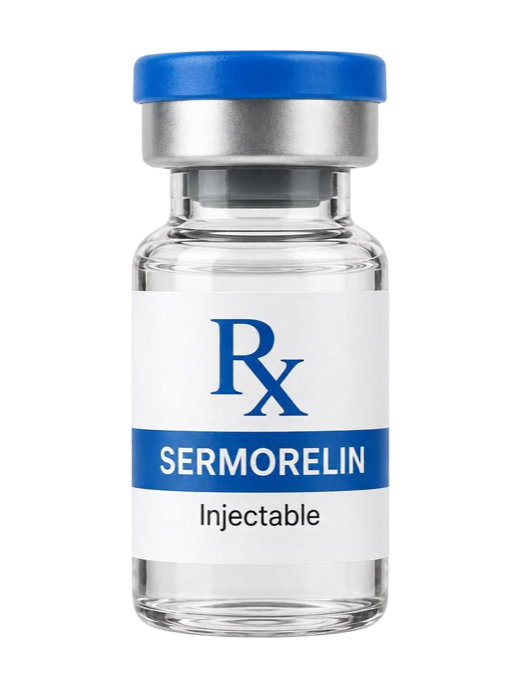
Sermorelin
Compounded injection, 3 mg/mL, 5 mL vialA lab-made copy of the active part of growth hormone-releasing hormone (GHRH). Instead of supplying growth hormone, it signals your pituitary to release more of your own, on your body's natural nightly rhythm.
- How you take it
- One small injection at bedtime
- Works on
- Your own growth hormone release
- FDA status
- Compounded, not FDA-approved
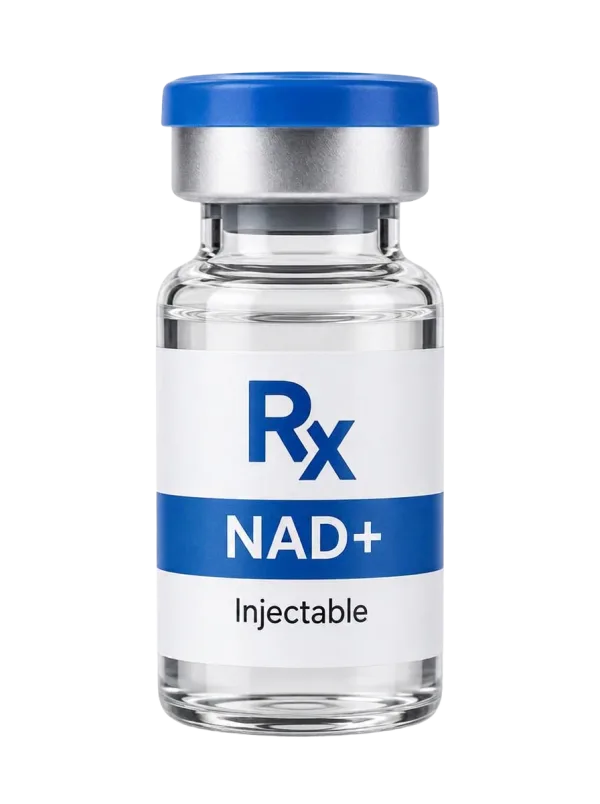
NAD+ injections
Compounded injection, 100 mg/mL (10 mL vial)NAD+ is a coenzyme every cell uses to make energy and repair DNA, and your levels fall with age. At-home injections cost a fraction of IV drips.
- How you take it
- Under the skin, on your provider's schedule
- Works on
- Cellular energy
- FDA status
- Compounded, not FDA-approved
Prescription required for every treatment. Plans are paid upfront: 3 months or a single month. An independent licensed provider decides whether a medication is right for you.
From your couch to your door in three steps.

Answer a few questions
A short online health questionnaire. No waiting room, no appointment to book.

A licensed provider reviews it
An independent U.S.-licensed provider prescribes only if treatment is right for you.

Compounded and shipped to you
A licensed U.S. pharmacy compounds your prescription and ships it to your door, with instructions for at-home use.
Sermorelin and NAD+ articles & guides
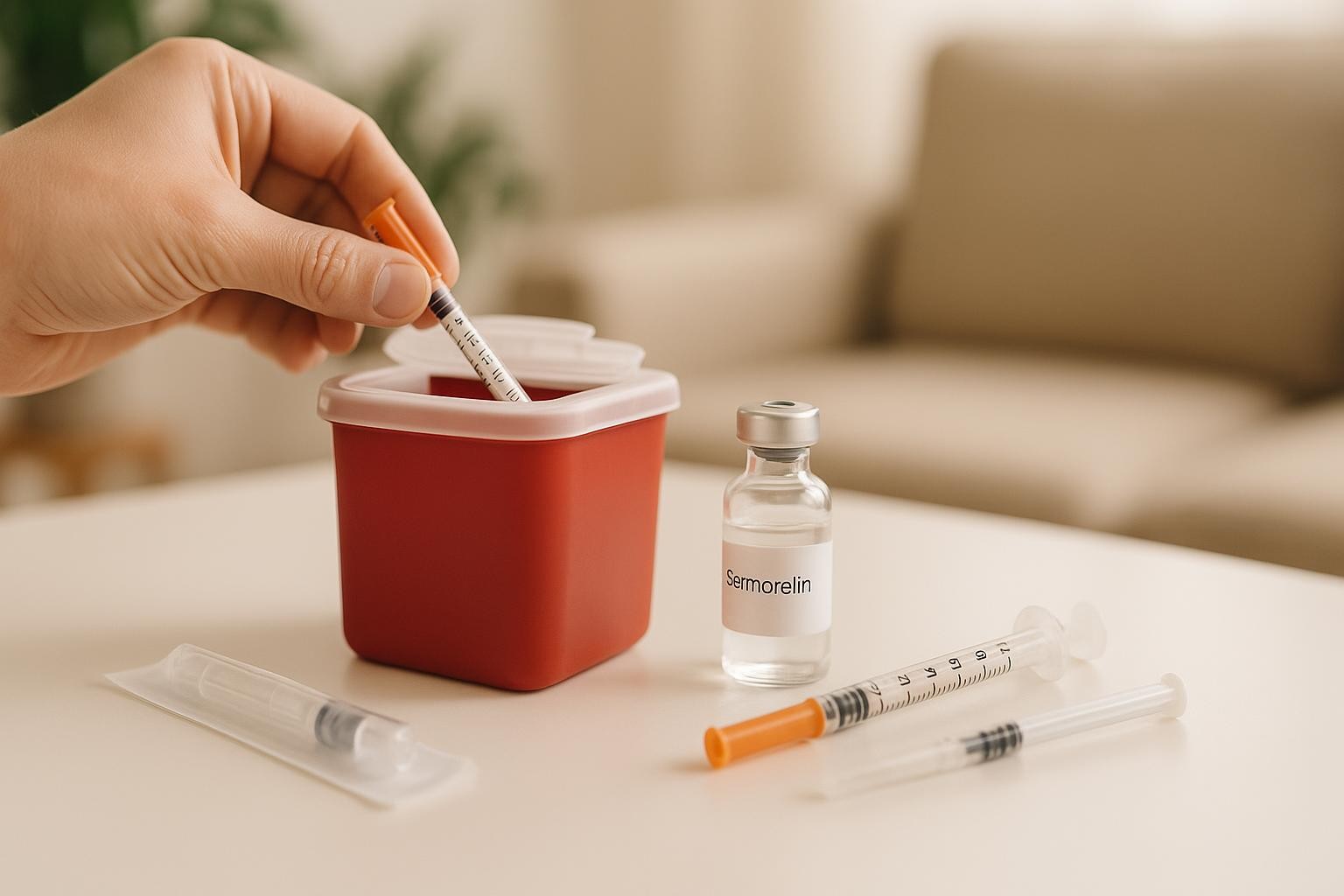 Sermorelin Injection Supplies: Needles, Syringes and Safe Sharps Disposal
Starting sermorelin therapy at home? This step-by-step guide explains the exact needles, syringes and alcohol...
 Does NAD+ Actually Do Anything? What the Research Shows
NAD+ infusions and injections are trending for energy, brain health, and "longevity." We dig into what NAD+ is...
 How to Get NAD+ Injections Prescribed Online
Need more energy or cellular support? Learn exactly how to qualify for NAD+ injections online in the United St...
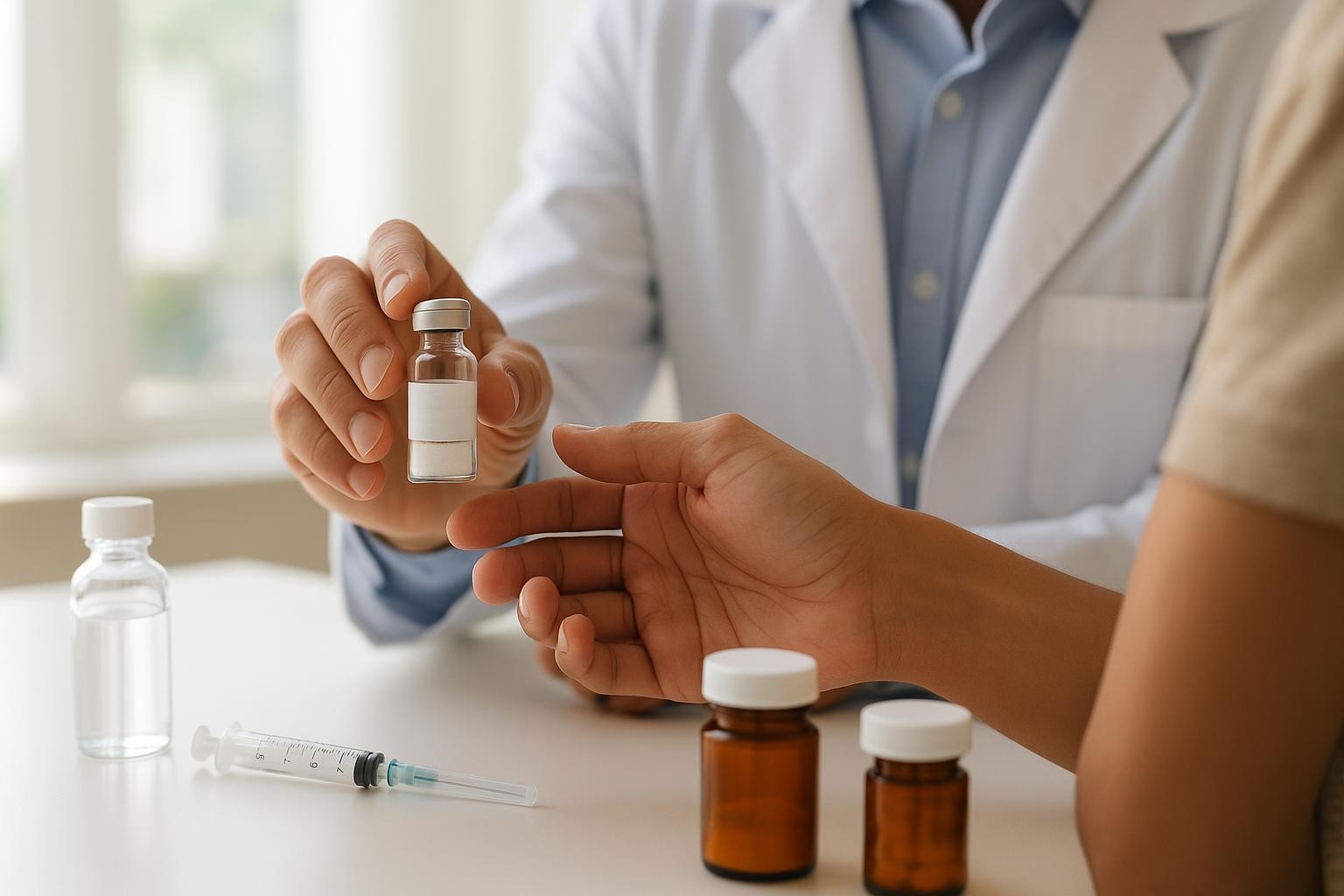 Compounded Sermorelin: How to Tell a Licensed Pharmacy From a Research-Chemical Seller
Buying sermorelin online? This guide shows you nine proof-points that separate a licensed 503A compounding pha...
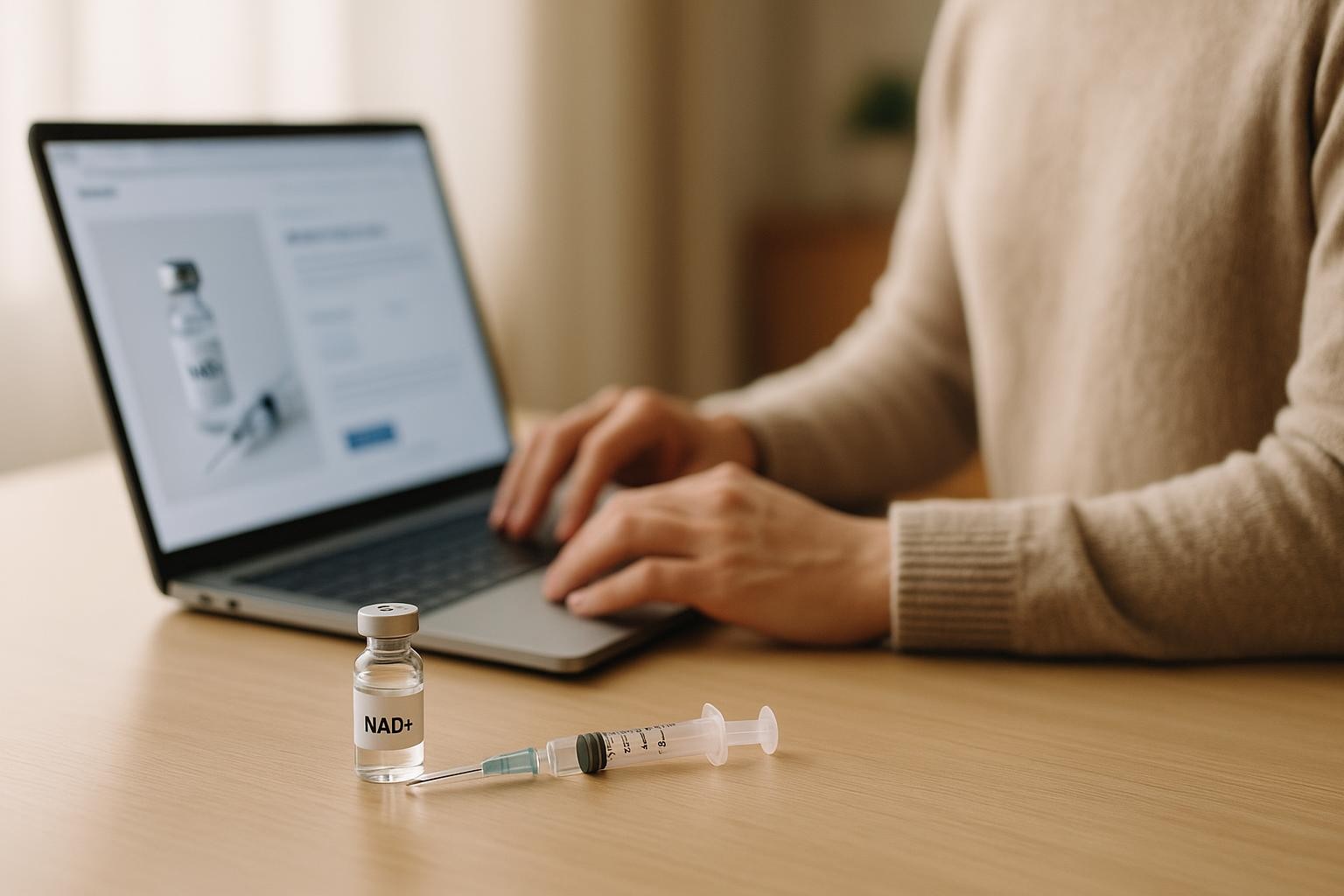 Ordering NAD+ Injections Online: What Arrives and Your First Week
Waiting on your first shipment of NAD+ injections? This guide shows what’s inside the box, how to store and mi...
 How Providers Personalize Sermorelin Treatment
Compounded sermorelin is not one-size-fits-all. This guide explains the labs, lifestyle factors, and follow-up...
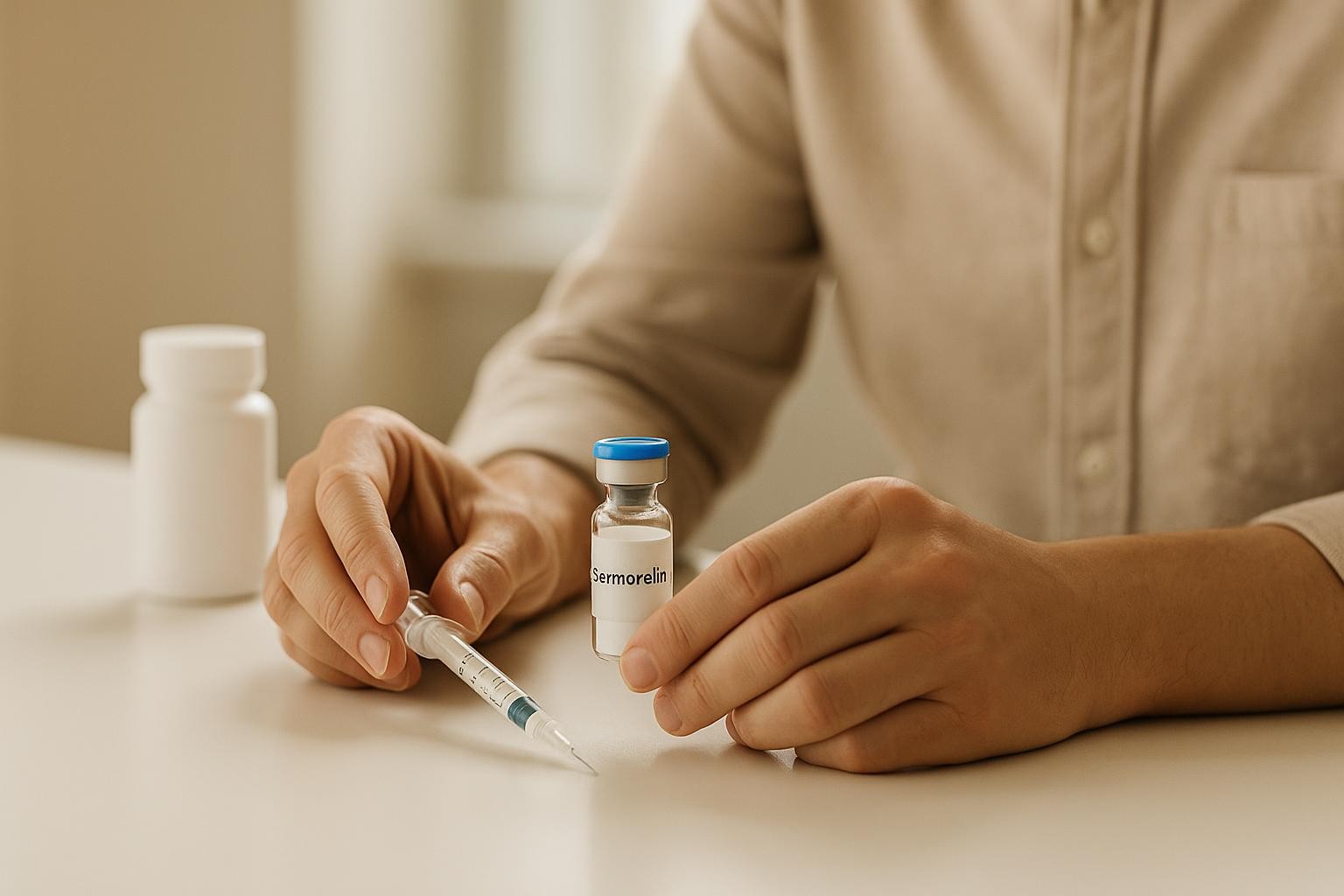 Your First Month on Sermorelin: What to Expect After You Order
Thinking about sermorelin? See how the first month unfolds, from the day your vial ships to the lab check your...
 NAD+ Nasal Spray Side Effects: Burning, Headaches and What Helps
NAD+ nasal spray can boost cellular energy, but the mist may sting your nose or leave you with a brief headach...
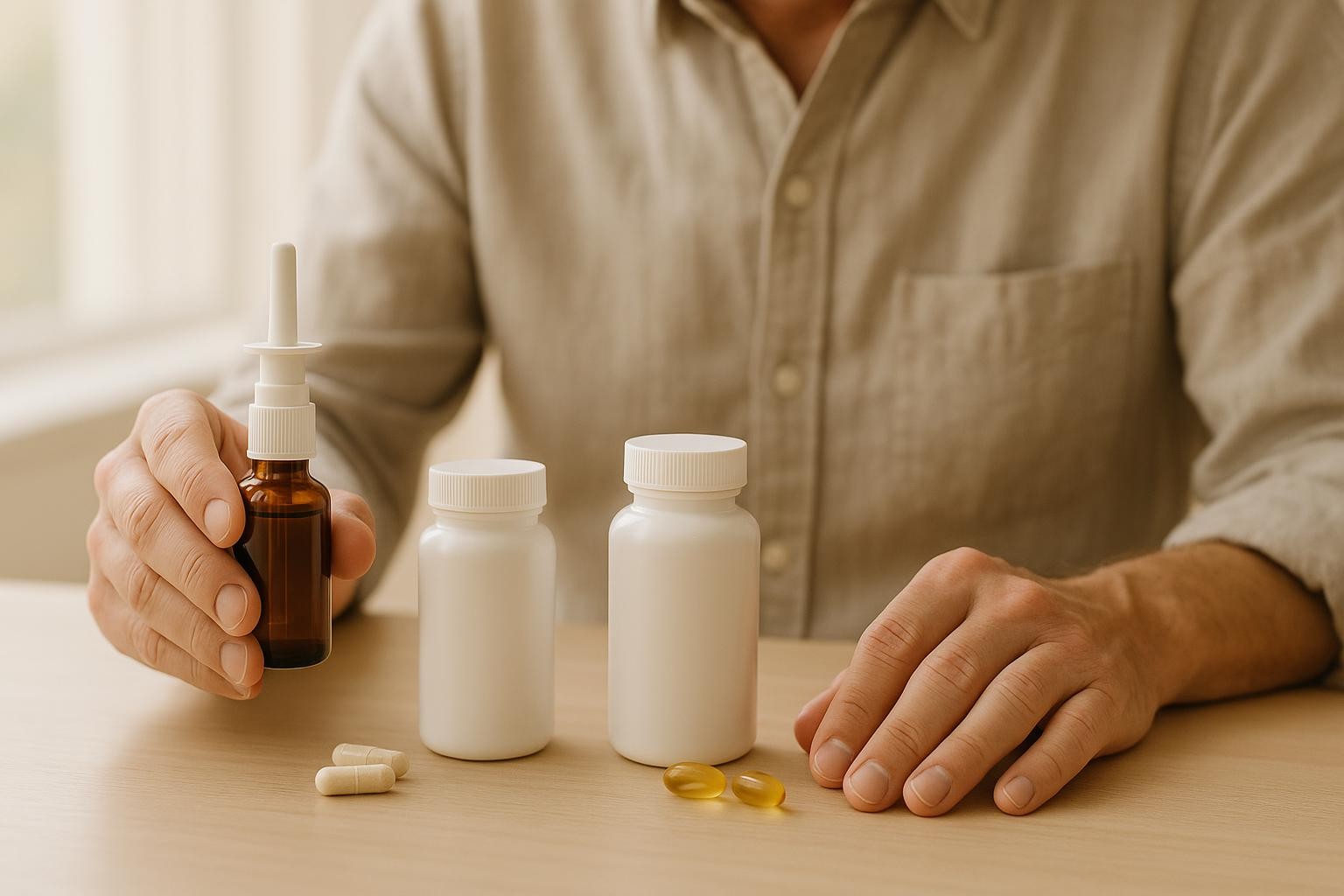 NAD+ Nasal Spray vs. NMN and NR Capsules: Is It Worth Switching?
Tried NMN or NR capsules but felt no boost? Learn how compounded NAD+ nasal spray works, what the science says...
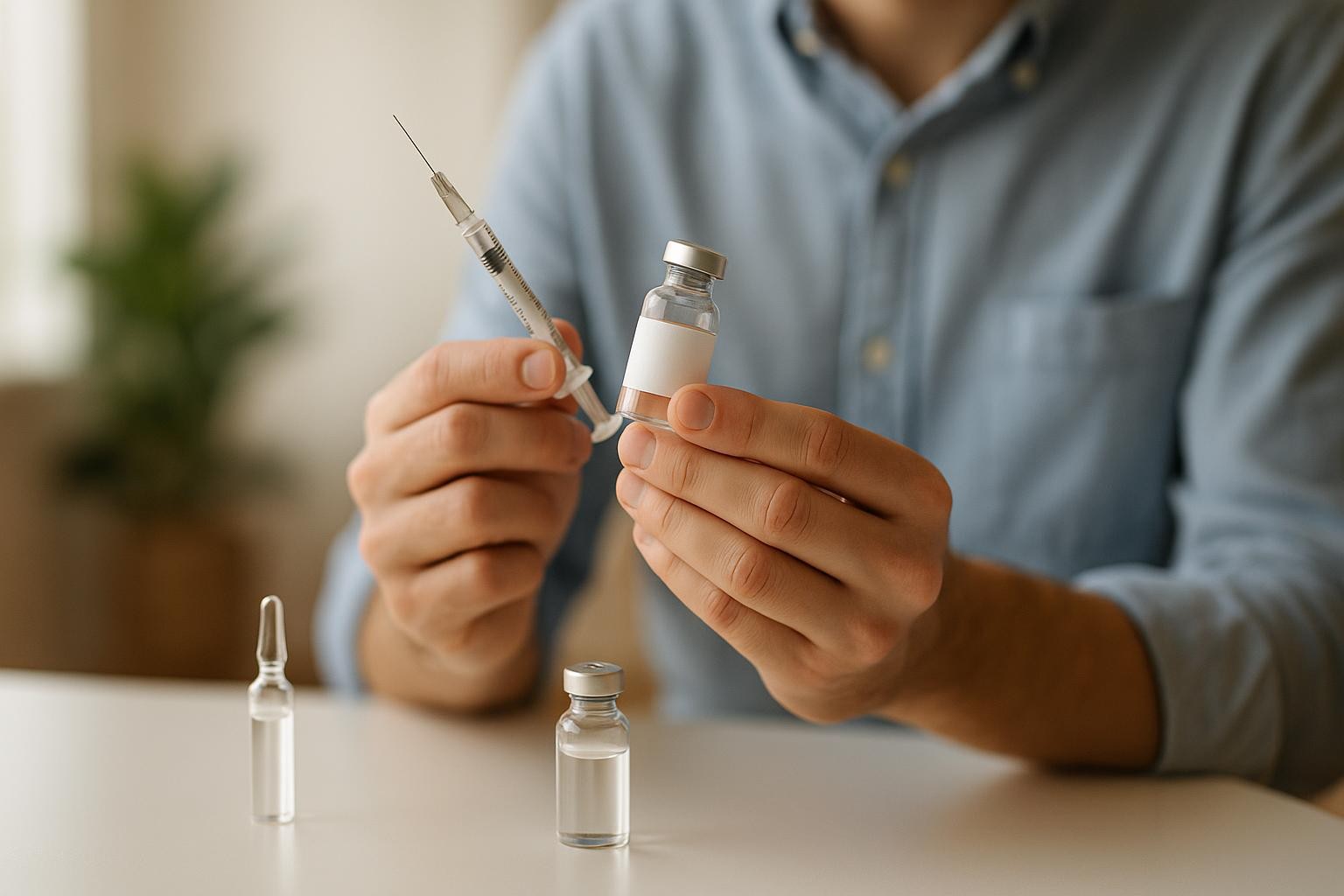 Sermorelin's FDA History: Why Geref Was Discontinued and What It Means Today
Geref, the only FDA-approved sermorelin, was pulled for commercial reasons in 2002, not for safety. Learn the...
 Questions to Ask Before Starting Sermorelin
Thinking about peptide therapy? This guide walks you through the critical safety, monitoring and practical que...
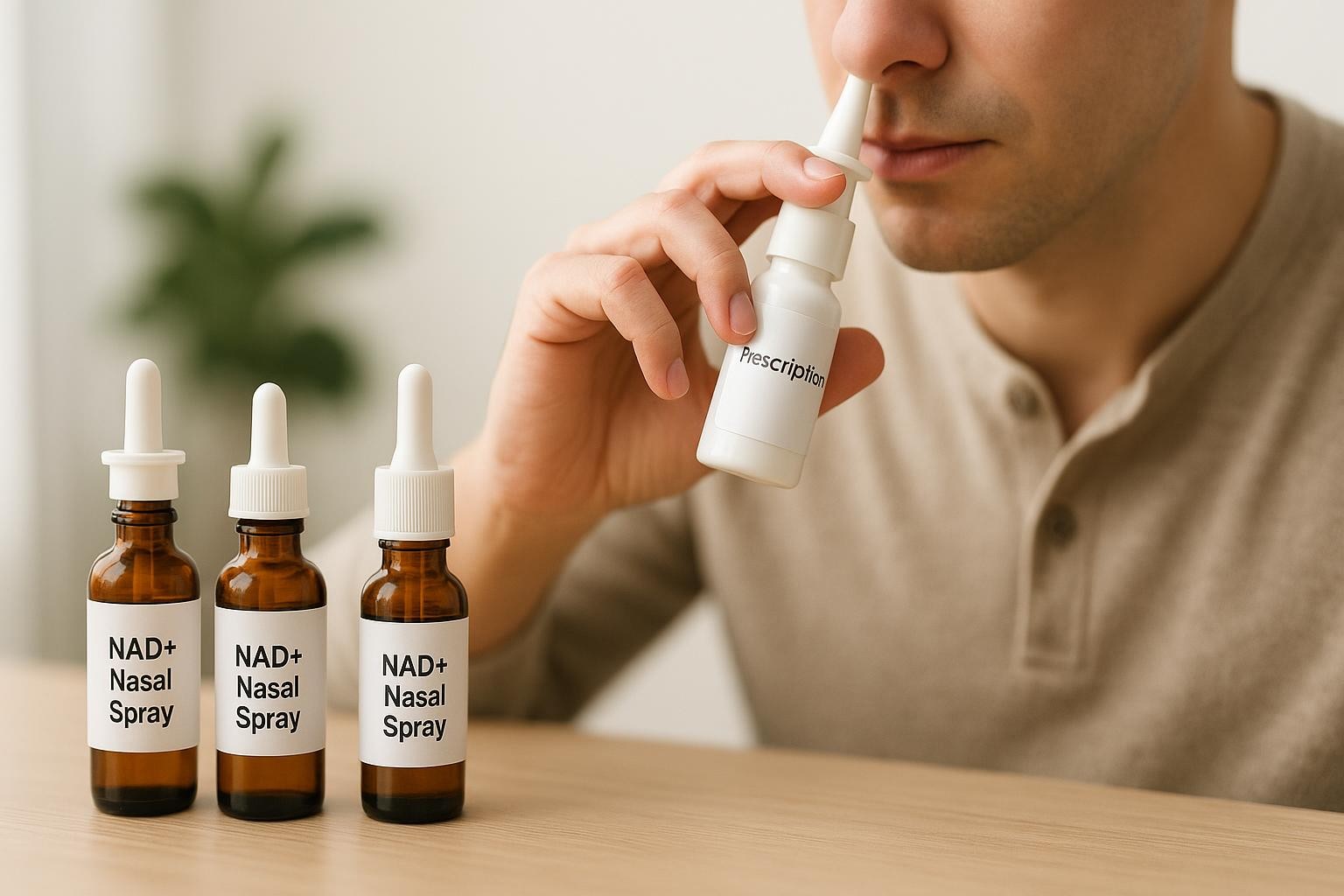 Prescription NAD+ Nasal Spray vs. DIY and Research Sprays: Why the Source Matters
Thinking about mixing your own NAD+ nasal spray or buying a “research” bottle online? Learn why a prescription...
Healthy aging questions
What is the difference between sermorelin and NAD+?
They work in different ways. Sermorelin is a lab-made copy of the active part of growth hormone-releasing hormone (GHRH): it signals your pituitary gland to release more of your own growth hormone, and it is taken as one small injection at bedtime. NAD+ is a coenzyme every cell uses to make energy and repair DNA, and your levels fall with age; it is injected at home, usually under the skin, on a schedule your provider sets.
Are sermorelin and NAD+ FDA-approved?
No. Both are compounded medications prepared by a licensed U.S. pharmacy for an individual prescription. Compounded medications are not FDA-approved, and the FDA has not reviewed them for safety, effectiveness or quality.
Do I need a prescription?
Yes. You answer a short online health questionnaire, and an independent U.S.-licensed provider decides whether treatment is appropriate. If it is, a licensed U.S. pharmacy fills your prescription and ships it to you.
Can I use both?
Each is its own prescription and its own online visit. Start with the one you are most interested in and tell the provider about every other treatment, medication and supplement you use. The provider decides what is appropriate for you.
Who should not use them?
Neither is for use during pregnancy or breastfeeding. Sermorelin is not appropriate for people with active cancer or a recent cancer history, and for NAD+ the provider needs to know about any history of cancer. Share your complete health history and medication list during the intake.
Does insurance cover it?
No insurance is needed and none is billed. Both are cash pay with upfront pricing: a 3-month plan paid upfront or a single month.
Your next step is a short online visit.
Pick a treatment, answer a few questions, and a licensed provider takes it from there.
Prescription required. Sermorelin and NAD+ are compounded and not FDA-approved.
Important safety information
Sermorelin
The most common side effects are injection-site redness, swelling or soreness, facial flushing, headache and nausea. Some people notice dizziness, restlessness or trouble sleeping. These are usually mild and tend to fade within the first week or two.
Sermorelin is not appropriate for people with active cancer or a recent cancer history, or during pregnancy or breastfeeding. Untreated hypothyroidism and diabetes need extra review, and some medications, including glucocorticoids (such as prednisone), can interfere with it. Share your complete health history and medication list during the intake. Get emergency care for trouble breathing or swelling of the face, tongue or throat.
NAD+ injections
Common side effects include injection-site soreness or redness, flushing, headache and lightheadedness; nausea, fatigue, sleep changes or jitteriness are less common. Do not use NAD+ if you are pregnant or breastfeeding. Tell the provider about all your health conditions, including any history of cancer, and every medication and supplement you take. Get medical care right away for signs of an allergic reaction such as hives, swelling of the face or throat, or trouble breathing.
Compounded medications: Sermorelin and NAD+ injections are available only with a prescription from a licensed provider after a health evaluation. Compounded medications are prepared by a licensed compounding pharmacy and are not FDA-approved products; the FDA has not evaluated them for safety, effectiveness or quality. They are not intended to diagnose, treat, cure or prevent any disease, and statements on this page have not been evaluated by the FDA. Individual results vary.
Medical services: All medical services, including clinical evaluations, treatment planning and prescribing decisions, are provided exclusively by licensed independent medical providers. Rx.com provides the technology platform and administrative coordination services, does not employ healthcare providers, and does not practice medicine. Rx.com does not manufacture compounded medications. This page is for informational purposes and is not a substitute for professional medical advice. Photos are of models.


